The Big Short Speaks: The AI Bubble’s Next Move (and How to Translate PDF Reports)

The Rare Voice of the Prototype of 'The Big Short': I Have Shorted the AI Bubble, Where is the Next 'Once in a Century' Opportunity?
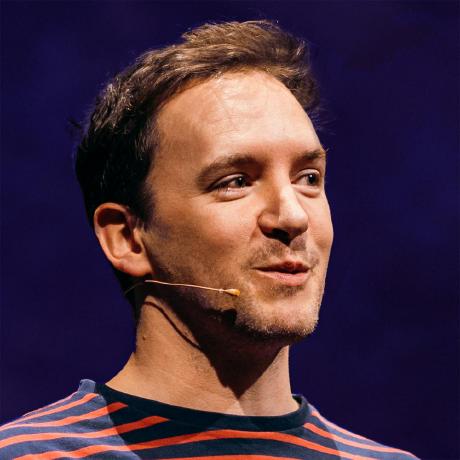
The Rare Voice of the Prototype of 'The Big Short': I Have Shorted the AI Bubble, Where is the Next “Once in a Century” Opportunity?
More than a decade ago, the book 'The Big Short' and its film adaptation introduced the world to Michael Burry, the legendary investor who became famous during the subprime mortgage crisis. Portrayed by Christian Bale on screen, he has chosen to remain extremely low-key in reality, rarely giving interviews.
However, recently, the real "Big Short" unexpectedly accepted a podcast interview with the original author Michael Lewis. The dramatic reason: Burry trended on social media for shorting AI giants Nvidia and Palantir, completely undermining his desire for privacy. "This kind of thing only happens to me," he lamented.
This rare conversation not only revisited the story behind 'The Big Short' but also revealed his profound insights into the current market, particularly the AI bubble, Federal Reserve policies, and even Bitcoin. We are fortunate to have organized this information-rich interview into writing, bringing you into the real world of this legendary figure.
I. Revisiting 'The Big Short': A “Once in a Century” Trade
In the interview, Lewis first inquired about the impact of the book and film 'The Big Short' on Burry's life. Burry candidly admitted that due to being on the autism spectrum, he is very good at living in his own world, shutting out external distractions. He has only watched the movie once at its premiere and read the book only once at its publication, after which he moved on without letting the fame affect him too much.
When asked about the groundbreaking short trade, Burry emphasized its uniqueness, calling it a “once in a century” opportunity.
- Creating Tools: At that time, there were no ready-made tools available to short subprime mortgage bonds directly. Burry not only foresaw the crisis but also proactively approached Wall Street, pushing them to invent the financial instrument known as "Credit Default Swap" (CDS) for him, essentially buying insurance for these junk bonds. Later, other characters in 'The Big Short' were able to enter the market using this tool he created.
- Precise Timing: Unlike most bubbles, the timing of the subprime crisis was predictable. Burry built a theoretical model on "when everything would collapse" through in-depth research. This allowed him to accurately grasp the timing and avoid the risk of going bankrupt too early due to the market's continued madness.
- Low Cost: When he established most of his positions at the end of 2005, almost no one believed this would happen. He even received a call from Goldman Sachs, curiously asking him, "What are you doing?" because he was the only one buying this type of insurance on a large scale for non-hedging purposes. This enabled him to complete this "stunning case" at an extremely low cost.
However, this massive victory did not bring him flowers and applause. Burry revealed that during the trading process, his investors were generally angry with him, and even after making a fortune, not a single person called him to apologize afterward. This experience left him disheartened, leading him to eventually close the fund and decide to only work with a few investors he knew and trusted when he reopened in 2013, maintaining a small-scale operation.
II. Shorting the AI Bubble: The “Fortunate” Truth about Palantir and Nvidia
The conversation shifted to the currently most attention-grabbing AI market. Burry became the focus due to his 13F filing revealing short positions against Palantir and Nvidia. He first clarified the media's misunderstanding: he does not hold a short position worth a billion dollars, but rather deep out-of-the-money put options with nominal values that are severely exaggerated, with actual investments possibly only around $10 million.
Why is he not optimistic about these two AI star companies?
Palantir: The Absurd Ratio of Billionaires to Revenue
- Burry believes that Palantir's business model has issues: the cost of software installation is high and requires bundling expensive consulting services.
- He discovered a shocking fact: this company, with an annual revenue of about $4 billion, has produced five billionaires, resulting in a billionaire-to-revenue ratio greater than one, which he finds unprecedented.
- The reason lies in the company's use of massive "equity incentives" to pay employee salaries, which almost accounts for all revenue. Wall Street often adds back this "non-cash" cost when calculating earnings, thus beautifying the financial reports. However, if the cash flow used to buy back shares to offset equity dilution is deducted, Palantir has historically "earned nothing."
Nvidia: The “Fortunate” Company Chosen by the Times
- Burry referred to Nvidia and Palantir as "the two luckiest companies on Earth" because they were not originally producing products for AI.
- Nvidia was initially an excellent computer graphics chip company that was fortunate to ride the wave of GPU demand from cryptocurrency mining and then was again fortunate to be chosen by the AI revolution.
- Palantir was similar; it was not an AI company a year or two ago, and only after the advent of ChatGPT did they add an AI shell to their existing applications and began selling so-called AI consulting services.
Burry believes that the current AI craze is very similar to the internet bubble of 2000. The essence of that bubble was the frenzy of building data transmission (fiber optics), while today it is the frenzy of capital expenditure on AI computing power. Historical data shows that peaks in related stock markets often occur just before the peak of capital expenditure frenzy. Currently, the market is in an irrational phase where "announcing one dollar of AI capital expenditure increases market value by three dollars." He believes that a two-year window to short this bubble is sufficient.
III. Market Insights: Stay Away from the Noise, Seek Value
In addition to his judgments on AI, Burry also shared his views on the broader market, which remain sharp and distinctive.
- About the Federal Reserve: He believes the Federal Reserve has caused a lot of damage over the past century, even stating, "We don't need the Federal Reserve," as a department of the Treasury would suffice. He thinks there is no reason to lower interest rates now; the neutral interest rate for the U.S. economy may be around 4%, and lowering rates would stifle savers and could lead to more complex issues due to debt conditions.
- About U.S. Debt: He acknowledged that the government's financial situation is quite "absurd," with annual interest payments reaching $1 trillion. However, he believes that due to the dollar's status as a reserve currency and the strength of the U.S., betting on America's collapse in the short term is not wise, just like "waiting for Castro to die is not a strategy."
- About Google: Although Warren Buffett's Berkshire Hathaway has bought Google, Burry remains cautious. He pointed out that he no longer uses Google Search, opting instead for large language models like ChatGPT. He believes AI will disrupt Google's low-cost business model for search, as the cost of AI queries is much higher than traditional searches, and Google's "golden goose" business (search) is facing threats.
- About Bitcoin: "This is the tulip bubble of our time, and even worse than the tulip bubble," Burry harshly criticized, "because it has allowed so much criminal activity to go underground."
- About Investment Opportunities: He suggested that if investors hold assets that have significantly risen and feel overvalued, they should sell. Currently, unpopular healthcare stocks may be worth paying attention to. As for safe-haven assets, he has held gold since 2005.
At the end of the interview, Lewis asked Burry if he regretted initially letting him into his life to tell his story. Burry candidly stated that it was initially out of a "defensive" mindset, hoping that through complete disclosure, the author could see the full picture of the facts. He wanted to prove that he did nothing wrong.
This conversation allowed us to once again see the independent, sharp, and unafraid Michael Burry. He lives in his own world, using rigorous data and a unique perspective to examine this noisy world, repeatedly issuing deafening warnings. His way of thinking, whether right or wrong, is worth each of us considering as a valuable reference in our investment and understanding of the world. Original interview link: https://www.youtube.com/watch?v=nsE13fvjz18