
OpenClaw Founder Dialogue: Self-Modifying AI Agents, Open Source Revolution, and the Crossroads of Future Programming
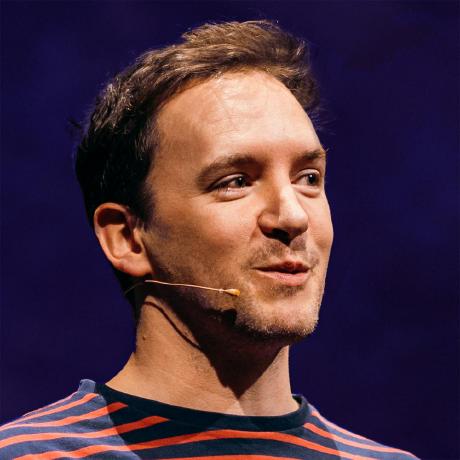
OpenClaw Founder Dialogue: Self-Modifying AI Agents, Open Source Revolution, and the Crossroads of Future Programming
In the conversation between Lex Fridman and OpenClaw founder Peter Steinberger, we see how an open-source AI revolution born from ambition has transitioned from experimentation to global implementation. From a one-hour prototype to a cross-platform self-modifying agent system, and the controversial naming saga to community co-creation, this is a true narrative about creativity, responsibility, and the limits of technology. This article will distill the core viewpoints, outline the technological context and future trends of OpenClaw, and help developers, businesses, and ordinary users understand the key opportunities and challenges of this AI agent era.
Hook: An AI Revolution Born from Frustration
The rise of OpenClaw is not accidental; it is a disruptive challenge to existing application models. It is not just an assistant that can converse through messaging clients, but an agent with system-level access that can autonomously execute tasks. It shows us how personal AI agency can be amplified to unprecedented scales when data, models, and execution capabilities are highly integrated. This phenomenon has rapidly spread globally, even prompting domestic cloud vendors to quickly lay out one-click deployment and integration with national applications like WeChat, marking a new phase in AI implementation.
Core Positioning and Capabilities of OpenClaw
- Core Positioning: A truly personal AI assistant that can "do things for you," capable of accessing your devices, communication tools, and data sources to complete tasks. Unlike traditional chatbots, OpenClaw is action-oriented, emphasizing a closed loop of "see-understand-execute."
- Cross-Platform Collaboration: Achieving conversational entry points through channels like WhatsApp, Telegram, and Discord, combined with CLI, cloud code, and local components for collaborative work.
- Open Source and Community-Driven: The success of OpenClaw largely stems from the rapid participation and contributions of the open-source community, attracting a large number of non-professional users, lowering entry barriers, and driving rapid innovation.
- Self-Modifying and Self-Reflective Capabilities: The system supports modifying its own software within prompts and frameworks, a practical implementation of the self-modifying software concept, enabling agents to continuously optimize themselves in real-world scenarios.
Technical Highlights of Self-Modifying AI and Agent Engineering
- Agent Cycle and Memory: The OpenClaw architecture emphasizes a continuous agent cycle, paired with a memory system to achieve continuity and evolution of context, helping agents maintain coherence in multi-turn dialogues and multi-task scenarios.
- soul.md and Personalization: By introducing the concept of the soul file soul.md, agents are endowed with certain personalities and behavioral styles, enhancing the usability and affinity of human-computer interaction, while also raising new discussions on ethics and safety.
- Heartbeat Mechanism: Regular heartbeat triggers allow agents to perceive the user's state and context beyond dialogues, enhancing their adaptability to the user's life rhythm.
- Collaboration of CLI and MCP: The introduction of skill-based capabilities enables models to collaborate with external services through command-line tools, with MCP (Modular Communication Protocol) and CLI jointly constructing clearer tool boundaries and composability.
- Security and Responsibility: Given its system-level permissions, the security of OpenClaw becomes a core issue. Developers and the community continuously improve documentation, skill audits, and external audits to promote more controllable open innovation.
The Naming Journey and Brand Challenges from WA Relay to Claude
Naming is the most intuitive brand litmus test in the early stages of open-source products. The initial name of OpenClaw was WA Relay, and the subsequent renaming to Claude was fraught with challenges, including cryptocurrency domain squatting, domain disputes, and trademark restrictions. This phase exposed the real contradictions faced by open-source projects in commercialization and brand protection, making community members realize the importance of a clear brand strategy and multi-channel collaboration. Through meticulous planning and comprehensive preemption, the team ultimately ensured the consistency and controllability of the core name globally, avoiding fragmentation risks.
The Power of the Open Source Community: Lowering Barriers and Fostering Creativity
The success of OpenClaw is seen as a model of the combination of open source and personal creativity. Through open code, participatory contribution processes, and beginner-friendly entry paths, an increasing number of people who were not previously developers have participated, submitting numerous improvements and pull requests. This community-driven approach not only shortens iteration cycles but also allows more people to experience the joy of building, collaborating, and learning in the real world. Community phenomena like MoltBook have also become part of AI culture, showcasing the charm of "bad art" and its inspirational role in social discussions.
Architecture and Workflow: From CLI-Led MCP and Modularity to Multimodal Memory
- Sub-Agent and Cloud Collaboration: OpenClaw supports the collaborative work of distributed sub-agents, enhancing the scalability and robustness of personal agents.
- Modularity and Skill Libraries: Skills exist as pluggable components, allowing agents to load and execute combinations as needed, forming flexible workflows.
- Multimodal Input and Memory: Text, images, voice, and other multimodal information are integrated into the agent's memory system, enhancing the depth of understanding and reasoning.
- Scripting and Automation: By combining command-line tools with browser automation (such as Playwright), agents can complete complex web interactions and task executions.
Impact on the Application Ecosystem and Future Trends
- Applications Gradually Transitioning to APIs and Automation Services: Future applications will resemble capability providers, with personal agents completing tasks by directly calling APIs or automating workflows, blurring the boundaries of traditional applications.
- The 80% Application Elimination Theory: With the help of advanced agents, many existing applications will be replaced by more general services, becoming API layers that provide data or functionality externally, rather than independent end products.
- Redesigning Productivity Tools: For businesses and individuals, the key lies in how to access efficient agent capabilities at minimal cost, reducing the workload of non-core tasks and unleashing creativity.
The New Identity of Programmers and Developers: From Programmers to Builders
Peter Steinberger's experience prompts a rethinking of the definition of technical roles. With the proliferation of AI agents, the role of programmers is shifting from mere code writers to broader system designers and builders. Future work will emphasize collaboration between humans and machines, systemic thinking, and an understanding of technological ethics and safety boundaries. For newcomers wishing to participate in this transformation, it is strongly recommended to be driven by curiosity, enhancing skills through open-source communities, practical project practice, and cross-domain collaboration.
The Dialectic of Security, Ethics, and Social Impact
- Balancing Risks and Protections: AI agents with system-level permissions bring unprecedented convenience but also potential security risks and abuse possibilities, necessitating the establishment of more robust governance mechanisms by multiple stakeholders.
- Positive Social Impact: On a personal level, agents help ordinary people complete complex tasks and enhance productivity; on a community level, the spirit of open source and collaboration has inspired more creators to participate.
- Transparency and Controllability: The memory, personality, and behavior of agents should be explainable and controllable to prevent abuse, misuse, or unintended actions.
Conclusion: The Arrival of the Personal Agent Era and Our Attitude Towards It
The story of OpenClaw is not just a narrative of technological achievement but a discussion about how humanity coexists with agents and how to unleash creativity while maintaining transparency and ethical boundaries. The future work ecosystem will increasingly rely on efficient agent systems, and we need to find a balance between open source, security, innovation, and social responsibility. For developers, embracing a builder mindset, continuous learning, and participating in community collaboration will be the most effective path to navigate this wave of AI agents. For ordinary users, understanding the capability boundaries of agents and remaining vigilant about information sources and security is equally crucial. Let us embrace this era of programming and artificial intelligence evolution with responsible enthusiasm.